Salomon Sulzer

Salomon Sulzer
Salomon Sulzer (1804 – 1890) was an Austrian hazzan (cantor) and composer.
Salomon Sulzer was born in Hohenems, the son of the merchant Josef Jakob Sulzer. Sulzer became a student of Rabbi Lippman. In 1818, Sulzer traveled through France with his teacher. Upon his return, he went to Karlsruhe for a year to study music. After these study periods in Karlsruhe and France, the sixteen-year-old finally received the cantor position at the Hohenems synagogue in 1820. In addition to his official duties, he founded a choir and a small orchestra.
The reputation of his musical talent reached as far as Vienna. In 1826, Sulzer was appointed cantor at the Vienna City Temple, which had been newly built the previous year, where, together with preacher Isaak Noah Mannheimer, he founded the “Vienna Rite”—a moderate form of reform that was accepted by both innovators and traditionalists. Sulzer continued his studies in Vienna as well, including composition under Ritter Ignaz von Seyfried.
Salomon Sulzer soon came to be regarded as a prominent figure even beyond the Viennese Jewish community. His wonderful baritone voice was known far beyond the city limits, and his enthusiastic admirers and patrons included the composers Franz Schubert, Franz Liszt, Giacomo Meyerbeer, Robert Schumann, and Niccolò Paganini, who frequently visited the Vienna City Temple to hear Sulzer sing. Franz Schubert set Psalm 92 to music for him, a composition that Sulzer later included in his book Schir Zion.
His fame also spread to Germany. In 1838, Hirsch, the cantor of Königsberg, performed Sulzer’s compositions, among others, in Berlin. The 17-year-old musician Louis Lewandoski was then tasked with transcribing Sulzer’s scores into treble clef for the Berlin cantor, so that Lion could rehearse Sulzer’s compositions with his singers. Shortly thereafter, Lewandoski became conductor of the four-part synagogue choir for the performance of Sulzer’s works in Berlin and began his own career as the most significant composer of 19th-century Jewish sacred music after Sulzer.
Sulzer’s major compositional work, which also established his reputation as a reformer of synagogue music, is the two-volume *Schir Zion* (Song of Zion), consisting largely of works he composed himself for use in worship services. These new compositions were written for the first time with four-part choral accompaniment and influenced the style of prayer in many synagogues. These compositions continue to shape synagogue singing in many communities to this day. Salomon Sulzer, together with Louis Lewandowski and Samuel Naumbourg, is thus credited with establishing the modern profession of the Jewish cantor in the 19th century, who saw himself not only as a musically improvisational prayer leader but also as a professionally trained singer, choir director, and composer. Sulzer served for many years as president of the Austro-Hungarian Cantors’ Association, which he co-founded.
Hohenems Genealogy. https://www.hohenemsgenealogy.at/getperson.php?personID=I1535&tree=Hohenems
The portrait of Sulzer, the Cantor and the Musician
Sulzer was a symbolic figure of the integrating Jewish community, which is why his appearance and portrait are just as important as his works.
Our collection preserves a few portrait of him:


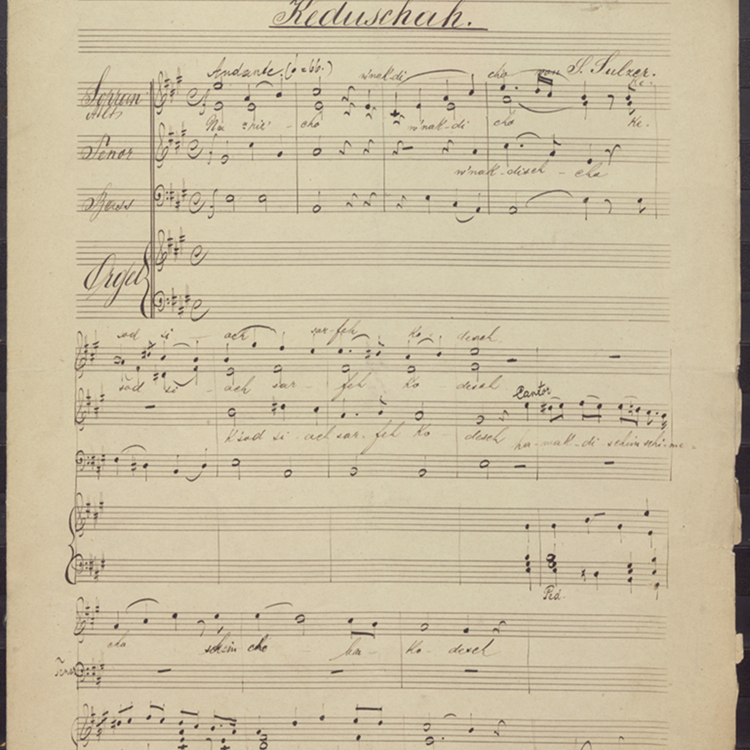
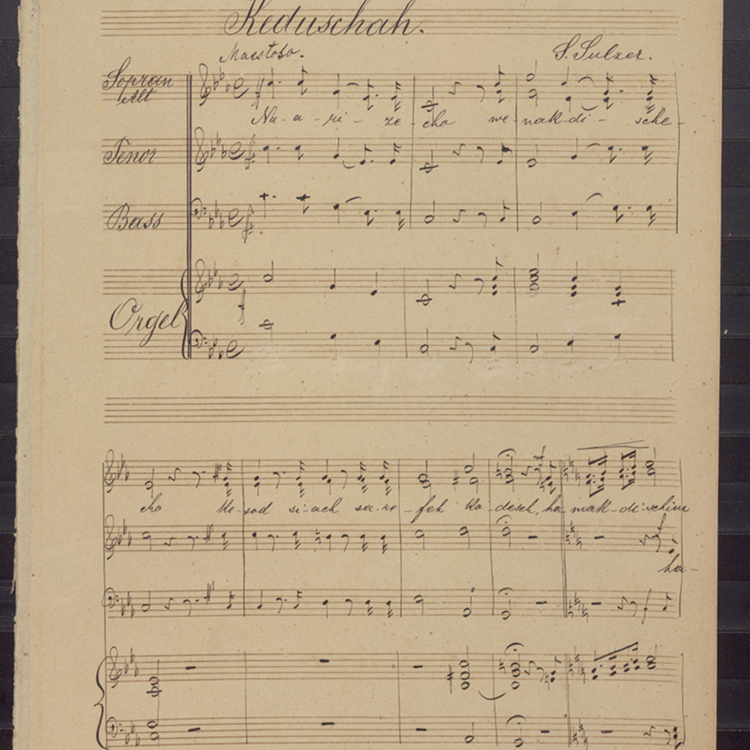
Compositions of Salomon Sulzer
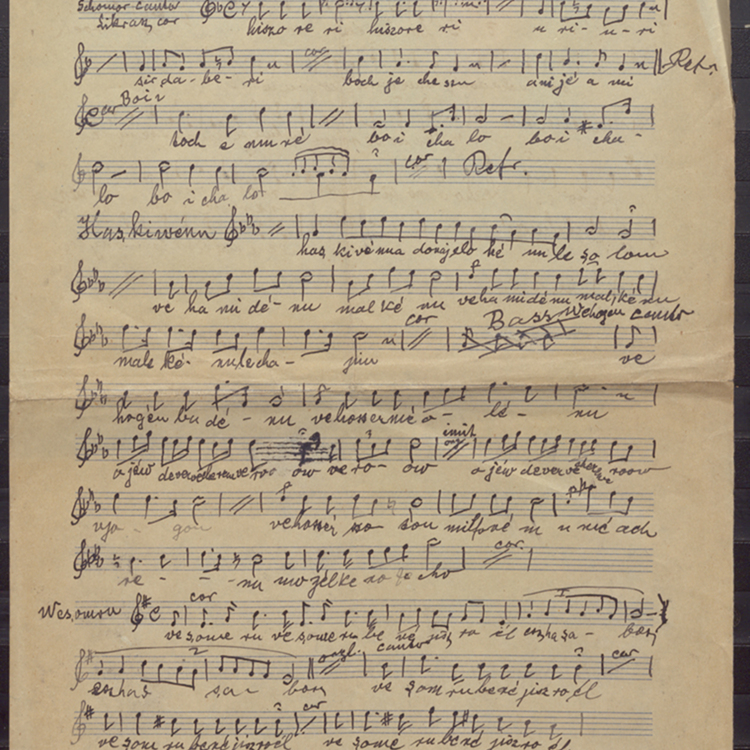
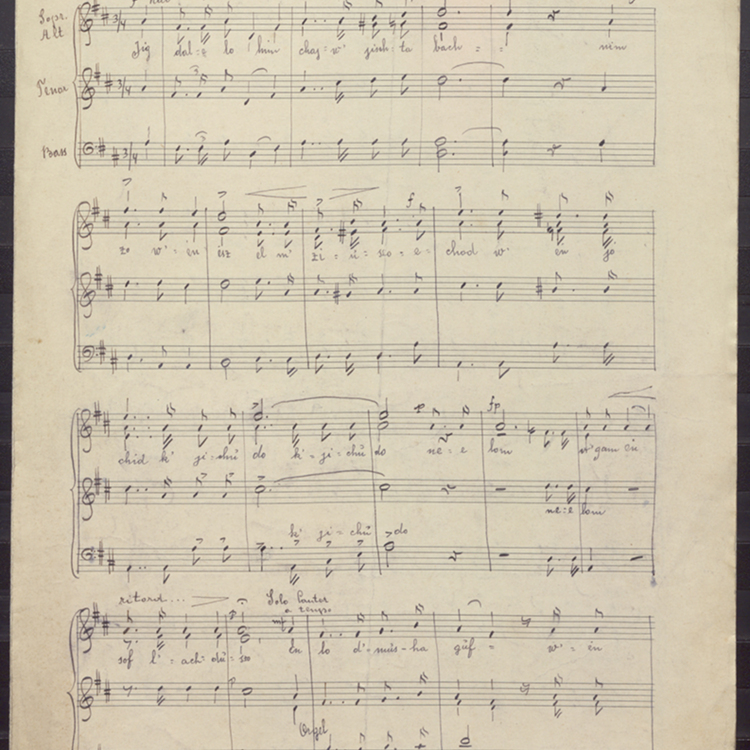
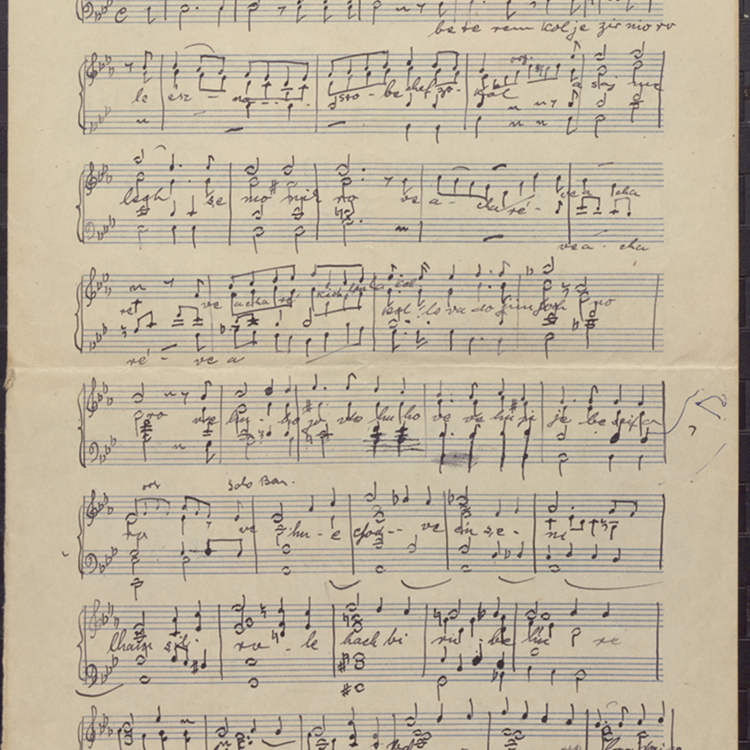
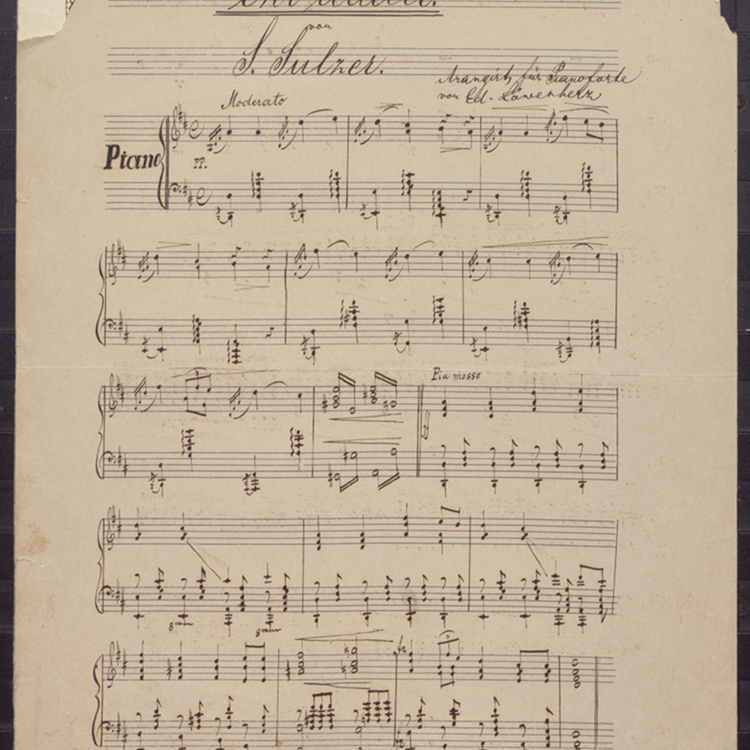
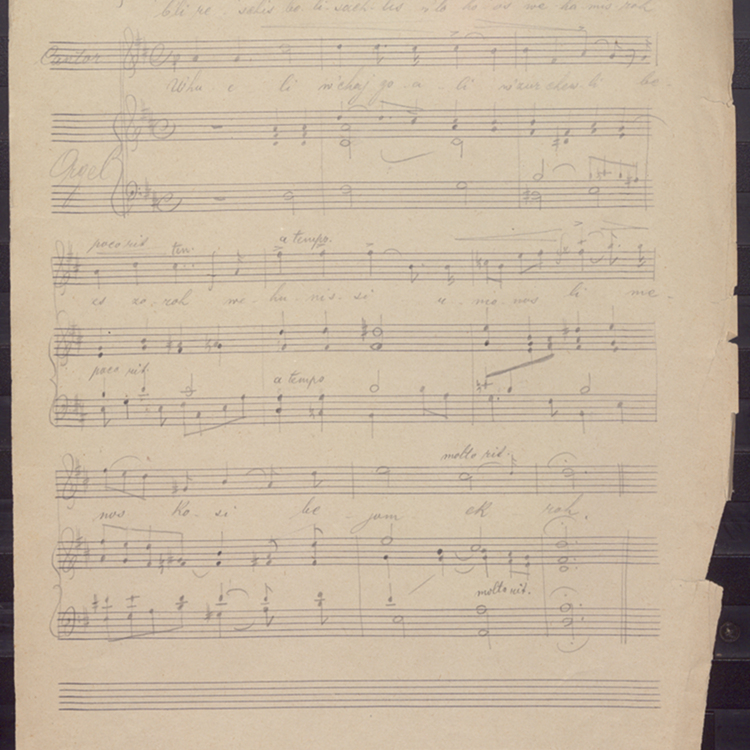
In addition to his printed major work, Schir Zion, our collection preserves a few manuscript written by other cantors, who were influenced by his oeuvre, and copied his compositions.