Friedmann Mór

Friedmann Mór
Friedmann Mór (1827-1891) chief cantor of the Dohány Street Synagogue.
He was a student of Goldmark Szimha Ruben in Keszthely, with whom he studied cantorial music. He was the first to teach Hungarian at the Jewish school in Deutschkreutz. By 1848, he was already a cantor and teacher in Sopron. He joined the rebels in the war of independence and married Károly Goldmark's sister, Johanna. In 1857, he was appointed chief cantor of Pest. He introduced the Sulzer style of prayer, supplementing it with his own religious songs.
He wrote a book entitled Izraelita vallásos énekek (Israelite Religious Songs), thereby rendering a great service to the Magyarization of the Jewish communities.
He inaugurated the Dohány Street Synagogue in Budapest with his singing on September 6, 1859. It was on his recommendation that the organ was introduced into the synagogue.
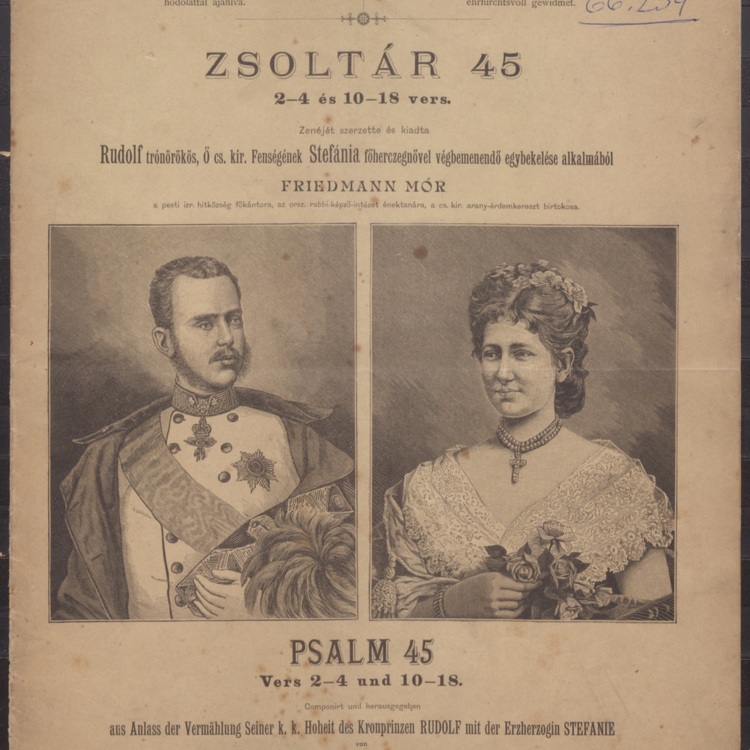
Ferenc Liszt himself spoke appreciatively of his compositions in 1865. He was vice-president of the Izr. Teaching Association from its inception. He was a teacher at the National Rabbinical Training Institute. The king awarded him the Order of Leopold, which came with the title of knight, and he was also a royal councilor.
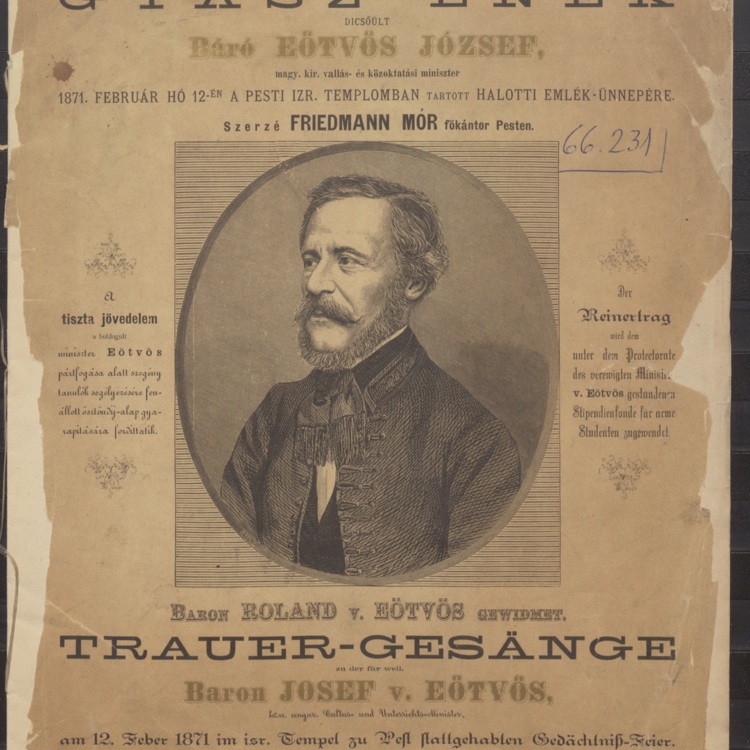
The portrait of Friedmann, the Cantor and the Musician
Similar to his master, Sulzer, Friedmann also was a symbolic figure of the integrating Jewish community. His portrait was made by Miklós Barabás, famous painter and lithographer at the time. Friedmann's appearance and portrait are just as important as his works.


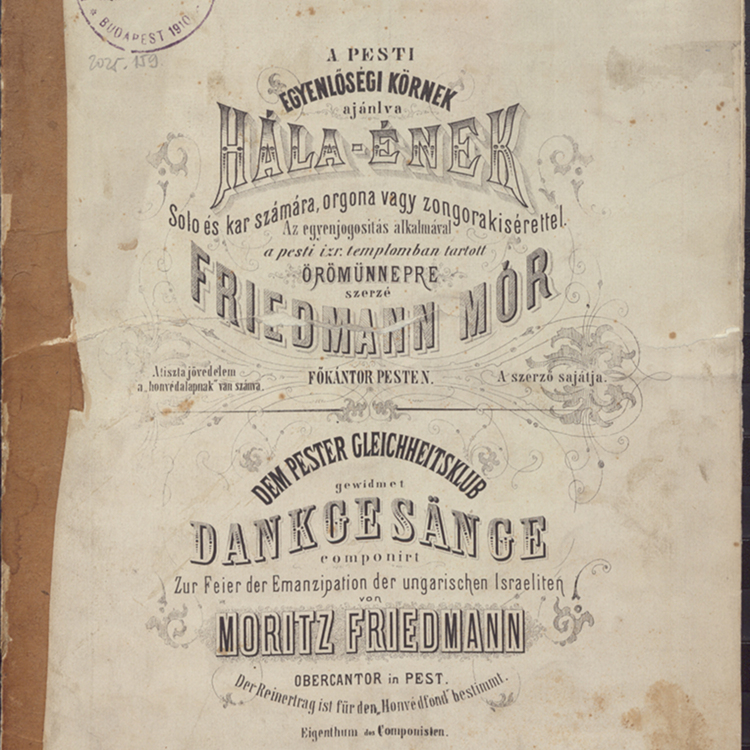
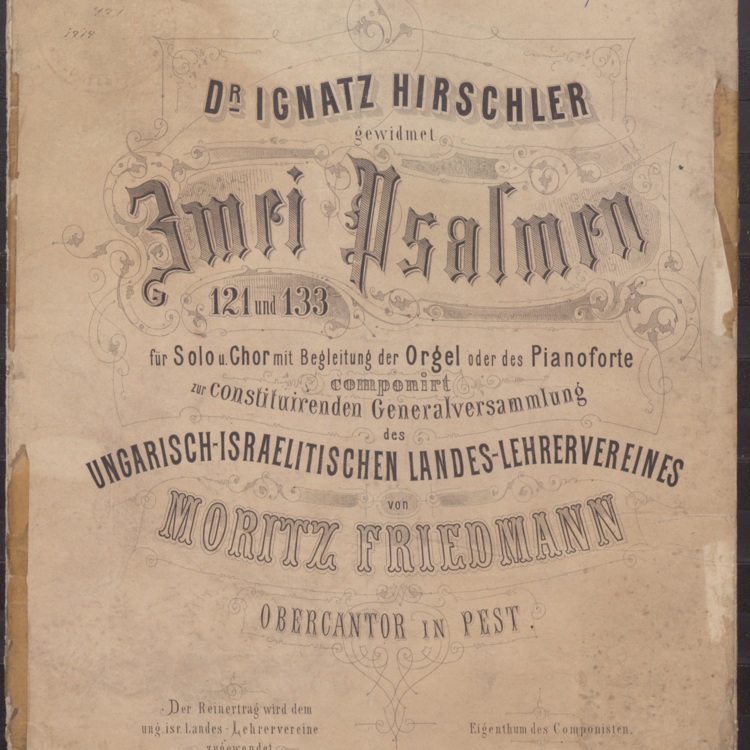
Compositions of Moritz Friedmann / Friedmann Mór